LASOMA Scholarship Programme 2026: Fully Funding for African Students
Quick Summary
LASOMA Scholarship Programme 2026 funds African MSc and PhD study in solar manufacturing research.
- Open to African nationals in engineering and related fields
- Covers tuition, stipend, insurance and research workshops
- PhD stipend is €1,230 monthly; MSc stipend is €890 monthly
- Deadline: 22 June 2026; study starts September 2026
Read on for LASOMA Scholarship Programme eligibility, benefits, schools, dates and application steps.
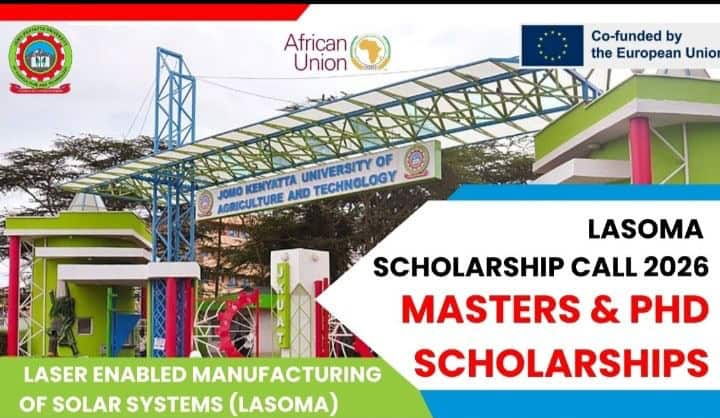
Applications are open for the 2026 LASOMA Scholarship Programme for African students who want to study for a Master's or PhD in engineering and related fields.
LASOMA stands for Laser Enabled Manufacturing of Solar Systems. The programme builds research capacity in solar manufacturing across Africa through advanced laser technologies and AI-powered systems.
Prepare for JAMB, WAEC, NECO, BECE, NCEE and Post UTME
Practise CBT Exams on Mobile or PC
Prepare for Post UTME, WAEC, NECO, JAMB UTME, Junior WAEC (BECE) and Common Entrance (NCEE) with the MySchoolGist CBT App and Software. Use it on Android, iPhone or Windows to practise past questions anytime.
Need help choosing the right version? Chat with us on WhatsApp .
Alternative admission via JUPEB/IJMB programmes (SPONSORED)
Enter 200-Level Directly! Gain University Admission via JUPEB/IJMB . Enjoy Low Fees! Call 08033006849 Now!
African Union supports the programme and European Union co-funds it. That backing places the scholarship within a wider push to train researchers who can work on solar manufacturing systems, engineering physics, mechatronics, materials, production and related areas.
What does the LASOMA Scholarship Programme cover?
The LASOMA Scholarship Programme supports selected African students with full study funding and research support.
Scholarship benefits include:
- Full tuition coverage
- Monthly stipend
- Insurance
- Technical research workshops
The monthly stipend depends on the study level.
| Study level | Monthly stipend |
|---|---|
| PhD students | €1,230 |
| MSc students | €890 |
This makes the scholarship suitable for applicants who need financial support for postgraduate study and research training. It also gives students access to technical workshops linked to the programme's research focus.
Who can apply for the LASOMA Scholarship Programme?
The scholarship is open to applicants who meet the nationality, academic and host university rules.
Applicants must:
- Be nationals of an African country
- Hold a Bachelor's and/or Master's degree in relevant engineering disciplines
- Show strong academic and research potential
- Meet the academic and language requirements of the host university
Female candidates, persons with disabilities and disadvantaged groups are encouraged to apply. This makes the programme open to a wider range of qualified African applicants, provided they meet the academic entry rules.
Which universities and programmes take part?
Four universities take part in the LASOMA Scholarship Programme across Ghana, Kenya and Nigeria.
| University | Country | Available programmes |
|---|---|---|
| Pentecost University | Ghana | PhD Engineering Physics/Actuating Intelligence Engineering Systems; MSc Intelligent Engineering Systems |
| Jomo Kenyatta University of Agriculture and Technology | Kenya | PhD Mechatronic Engineering; MSc Mechatronic Engineering |
| Federal University, Lokoja | Nigeria | PhD Engineering Physics; MSc Solid State Physics; MSc Engineering Physics |
| Federal University of Technology, Minna | Nigeria | PhD Industrial and Production Engineering; PhD Materials and Metallurgical Engineering; M.Eng Mechanical Engineering (Materials and Metallurgical, Industrial and Production) |
Applicants should choose a programme that fits their academic background and research interests. A candidate with a materials, mechanical, mechatronics, engineering physics, solid state physics, industrial or production engineering background may find a suitable route among the listed options.
What documents does an applicant need?
Applicants need academic records, personal statements, referee support and programme forms.
Required application documents include:
- Academic transcripts and certificates
- Curriculum Vitae (CV)
- Motivation letter
- Research proposal
- Two recommendation letters
- Completed application form
- 2-minute elevator pitch video, for PhD applicants only
The research proposal matters because the programme targets research capacity in solar manufacturing, laser technologies and AI-powered systems. Applicants should make their proposal clear, focused and linked to the programme they choose.
How can applicants apply for the LASOMA Scholarship Programme?
Applicants should apply through the official LASOMA application portal.
Apply through the LASOMA Scholarship Programme portal
A clear application process should follow this order:
- Review the participating universities and available programmes.
- Choose the MSc, M.Eng or PhD option that matches the applicant's academic background.
- Prepare transcripts, certificates, CV, motivation letter, research proposal and two recommendation letters.
- Record a 2-minute elevator pitch video if applying for a PhD.
- Complete the application form through the official portal.
- Submit before the deadline of 22 June 2026.
Applicants should also check the academic and language requirements of the host university before submission. That step can prevent avoidable rejection for incomplete eligibility.
What are the key dates for LASOMA 2026?
The LASOMA Scholarship Programme follows a short application timeline.
| Event | Date |
|---|---|
| Applications open | 8 May 2026 |
| Application deadline | 22 June 2026 |
| Selected applicants notified | 13 July 2026 |
| Programme starts | September 2026 |
Applicants have from 8 May 2026 to 22 June 2026 to complete and submit their applications. The selected applicants will be notified on 13 July 2026 and studies will begin in September 2026.
Which applicants should consider LASOMA?
LASOMA suits African students who want postgraduate study linked to engineering, solar manufacturing, laser technologies and AI-powered systems.
It may fit applicants who:
- Have an engineering or related academic background
- Want MSc, M.Eng or PhD training
- Can prepare a research proposal
- Meet the host university's academic and language entry rules
- Want research exposure through technical workshops
PhD applicants also need a short elevator pitch video. That requirement gives them a chance to present their research interest in a direct and focused way.
What should applicants check before submission?
Applicants should check every requirement before submitting the form.
A good final check includes:
- Nationality matches the African country requirement
- Degree background fits the chosen programme
- Transcripts and certificates are ready
- CV is current
- Motivation letter explains the study goal clearly
- Research proposal fits the selected programme
- Two recommendation letters are complete
- PhD elevator pitch video is ready, if required
- Application form is complete
- Submission happens before 22 June 2026
Small errors can weaken an application. A careful review helps the applicant send a complete file.
How can applicants get more information?
Applicants can contact the programme through the official email address:
infolasoma@pentvars.edu.gh
They can also use the application portal to begin the process and check programme details. The scholarship is open now, so applicants who meet the requirements should prepare their documents early and apply before the deadline.
Share This Post: If this post helped you, share it with others! Use the buttons below to spread the word!
More Articles:
- Sokoto State Scholarship Board Warning On Fake Scholarship Screening Notice
- Leventis Foundation Scholarships 2025-2026 for Nigerians

- Federal Government Scholarship Awards 2025

- Federal Government Education Bursary Award (EBA) 2025
- University of Offa (UNIOFFA) Announces Full & Partial Scholarship Opportunities For 2026/2027 Admission Exercise
- PPAFAN Scholarship 2026 Opens for FCT Indigene Undergraduate Students
- NNPC-SNEPCo Postgraduate Scholarship 2026: Eligible Courses, Requirements and How to Apply
- Heirs Insurance Essay Championship 2026: Topic, Prizes, Rules and How to Apply