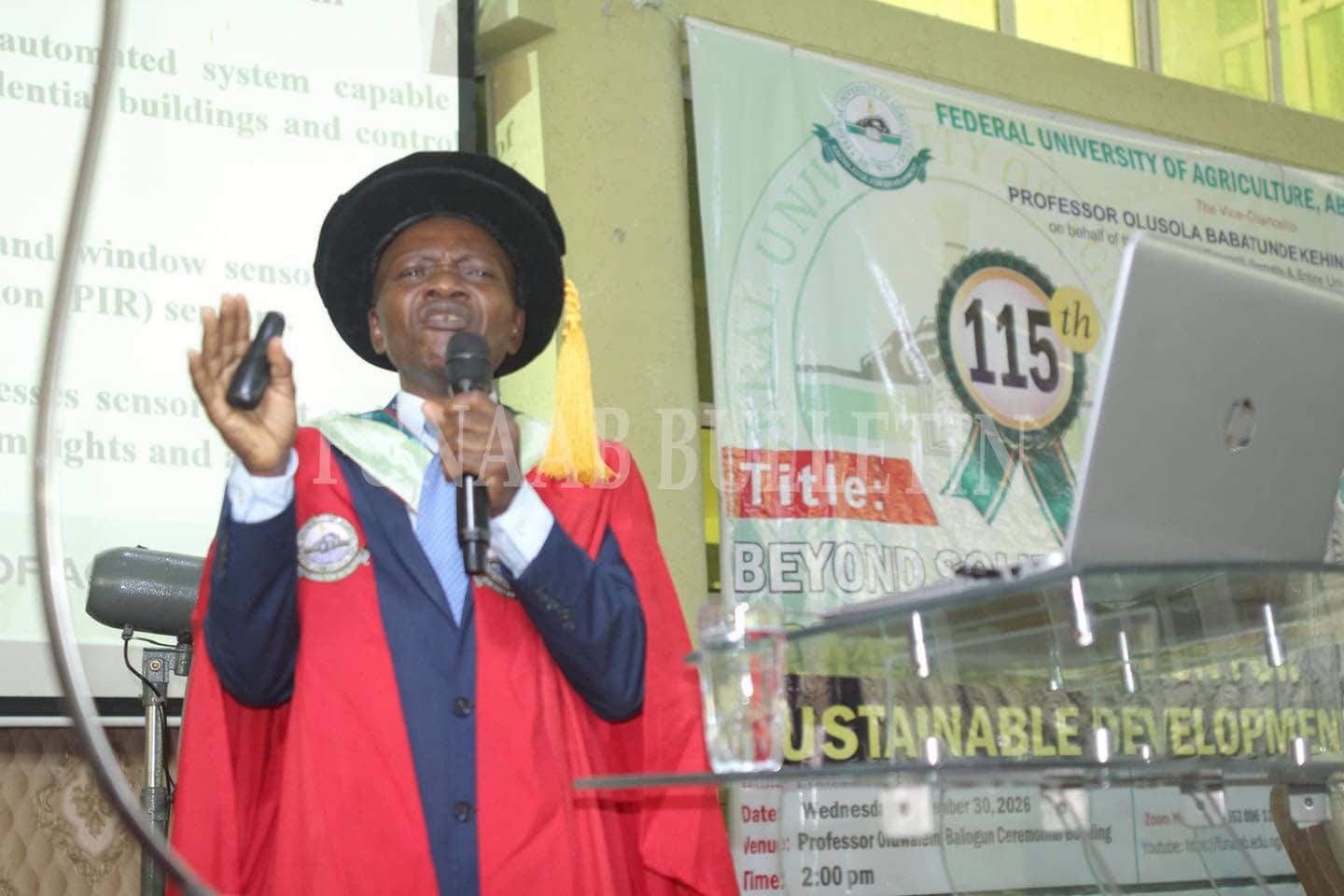
Prof Olubunmi Akinola has called for stronger government support for home-grown technology, he made the call during the Federal University of Agriculture, Abeokuta's (FUNAAB) 115th inaugural lecture on 30 September 2026.
The lecture, "Beyond Solid-State Electronics: Driving Automation for Sustainable Development", took place at the Prof Oluwafemi Balogun Ceremonial Building.
Policy Support for Local Technology
Prof Akinola, an Electronic and Control Systems Engineering expert from the Department of Electrical and Electronics Engineering, College of Engineering, urged Nigeria to strengthen local manufacturing and support technologies developed within the country.
He proposed an indigenous technology policy that would help research move from university laboratories to the marketplace. His call placed greater emphasis on production and industrial development.
The lecturer said engineering research should produce practical and affordable solutions, with uses beyond academic publications.
Agricultural Research Presented
Prof Akinola presented HarvestHarbor, a patented smart storage technology designed to preserve fresh fruits and vegetables and reduce post-harvest losses.
He also described an electronic pest-repellent system developed to reduce losses caused by birds in rice and fish farming.
The lecturer called for training for farmers and Extension Officers on the use and maintenance of smart agricultural technologies, agro-processing stakeholders were also included in this proposal.
He said wider use of automation and sensors could support precision farming. Cooperation among engineers and agricultural scientists, alongside information technology specialists, formed part of his proposals.
Security and Healthcare Applications
The lecture covered microcontroller-based technologies for home security and fingerprint access control, Prof Akinola also presented research in medical image processing and the analysis of Tuberculin Skin Test induration.
He proposed gradual adoption of access-control systems with biometric authentication and real-time monitoring. Remote alerts were another feature he identified for improving security records and access management.
Commercialisation and Industry Cooperation
Prof Akinola urged closer work between universities and research bodies, with industry support to help local technologies reach commercial production and wider use.
He called for adequate backing for commercialisation and deployment so that research products could serve needs beyond the university.
University Response
The Vice-Chancellor, Prof Babatunde Kehinde, was represented by the Deputy Vice-Chancellor, Academic, Prof Olusegun Idowu. He described the lecture as the second from the Department of Electrical and Electronics Engineering and the 13th from the College of Engineering.
The Vice-Chancellor recognised the practical uses of the research in agriculture and security, the healthcare work also formed part of his response. He urged greater attention to turning research findings into solutions that could improve lives and create economic opportunities.