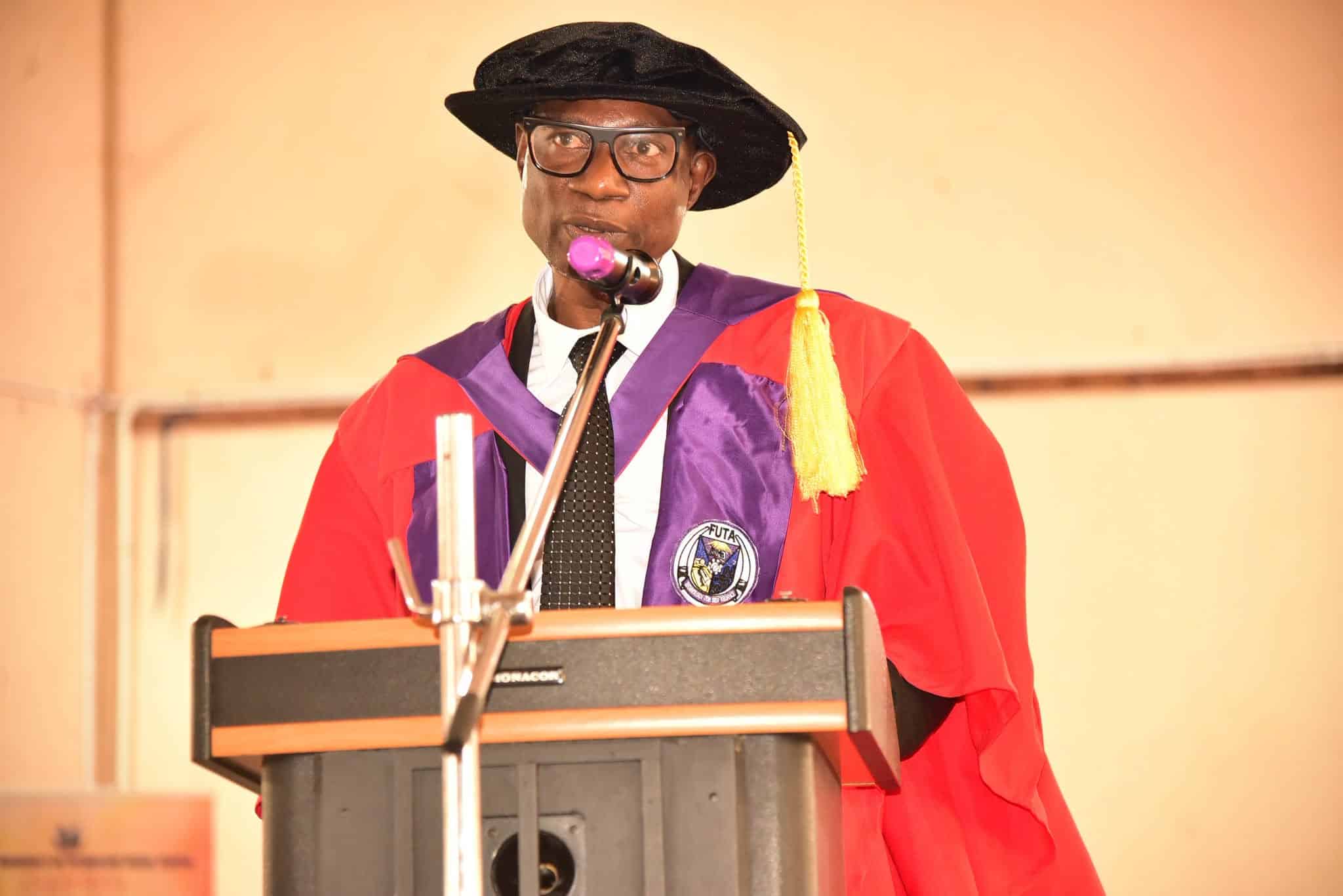
Prof. Gabriel Babatunde Iwasokun of the Federal University of Technology, Akure (FUTA), has called for greater investment in homegrown software engineering to address Nigeria's development and security challenges.
Prof. Iwasokun, who teaches in the Department of Software Engineering in FUTA's School of Computing, delivered the university's 211th inaugural lecture on Tuesday, 24 November 2026. The lecture was titled "National Development and Security: Software Engineering to the Rescue".
Where locally developed software could help
Prof. Iwasokun argued that security and development reinforce each other. He called for Nigeria to develop software suited to local needs, use locally developed technology at borders and entry points and adopt biometric identity management across public and private service centres.
He cited applications in identity verification, electronic voting, agriculture, healthcare, education, digital payments, cybersecurity and local-language services. He said locally developed tools could improve services and reduce dependence on imported technology.
His research covered fingerprint recognition, real-time personnel tracking, digital information protection and the use of data to study technology adoption and factors associated with criminal activity. He presented nine applications developed through research and collaboration, covering emergency communication, library management, fingerprint-authenticated ATM access, virtual learning, health personnel monitoring, petroleum plant monitoring, inventory management, agricultural loan assessment and remote invigilation of computer-based examinations.
Funding, training and industry collaboration
Prof. Iwasokun called for more funding for software engineering education and research, alongside better pay and working conditions to retain Nigerian software engineers. He recommended modernising university curricula, supporting publication in high-impact indexed journals and commercialising research through partnerships with industry.
He also urged collaboration among government and technology bodies, including the Institute of Software Practitioners of Nigeria, the Nigerian Computer Society, the Computer Professionals Registration Council of Nigeria and the National Information Technology Development Agency, to address cyber threats.
The Vice-Chancellor, Prof. Temidayo Adenike Oladiji, said the lecture was timely given Nigeria's development and security concerns.