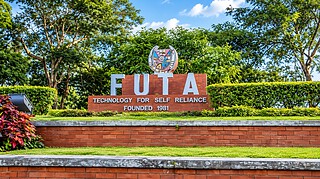
Experts at the Federal University of Technology, Akure (FUTA) have called for a human-centred approach to artificial intelligence (AI), with emphasis on responsible innovation, independent thinking and solutions that address Nigeria's development needs.
The call was made during the School of Physical Sciences Annual Conference and Lecture at the T. I. Francois Auditorium on 5 November 2026. The conference theme was "The Role of Humanity in the Advancement and Applications of Artificial Intelligence", while the annual lecture focused on "Advancing Artificial Intelligence for Sustainable Innovation and National Development".
Responsible AI must preserve human judgement
Former Economic Adviser at the UK Office for National Statistics, Mr Kayode Adaramodu, urged institutions and governments to balance technological innovation with appropriate safeguards. He identified transparency, accountability, cybersecurity, privacy and fairness as essential principles for the responsible development and use of AI.
Addressing students, Adaramodu warned against allowing AI tools to replace critical thinking, reasoning and independent decision-making. He encouraged students to understand how AI works and use it to strengthen their intellectual abilities rather than surrender their judgement to automated systems.
He also called for collaboration among mathematicians, physicists, computing specialists and other researchers. Such partnerships, he said, would help universities build indigenous technologies and develop solutions to practical challenges.
AI adoption should deliver practical results
Delivering the annual lecture, Ms Tonye Ikoko, Project Information and Digital Technology Manager of the NLNG Train 7 Project, described AI as a tool for improving productivity, research and service delivery.
Ikoko argued that organisations should assess AI by the value it adds rather than by the novelty of the technology. She encouraged clearly defined objectives and measurable outcomes, including reducing operational bottlenecks, simplifying complex tasks and improving decision-making.
She urged higher institutions to strengthen digital literacy, incorporate emerging technologies into teaching and research and prepare students to develop solutions rather than remain passive users of digital platforms. Stronger cooperation between universities, industry and government, she added, would support knowledge exchange and the development of home-grown technologies.
FUTA leadership backs ethical innovation
FUTA Vice-Chancellor, Professor Temidayo Adenike Oladiji, supported the call for responsible technological development and stressed the need for students and researchers to acquire the skills and ethical awareness required in an increasingly digital society.
The Dean of the School of Physical Sciences, Professor Femi Barnabas Adebola, said AI should complement human intuition, empathy, critical thinking and moral judgement rather than replace them. He identified education, healthcare, agriculture, engineering, business, communication and transportation among the sectors affected by AI.
Professor Adebola explained that the five-year-old School comprises Chemistry, General Studies, Mathematics, Physics and Statistics. The annual lecture tradition was inherited from the former School of Sciences.
Chairman of the Local Organising Committee, Professor Kayode David Adedayo, highlighted opportunities for applying AI to agriculture, education, entrepreneurship and public services in Nigeria. The conference also featured plenary sessions headed by Professor Olorunsola Olowofeso of Nasarawa State University, Keffi and Professor Olayide Lawal of Federal University Oye-Ekiti.